How we redesigned Element Designs' website without losing SEO
We rebuilt Element's website around what its buyers search for, and carried over the search history the old site had earned.
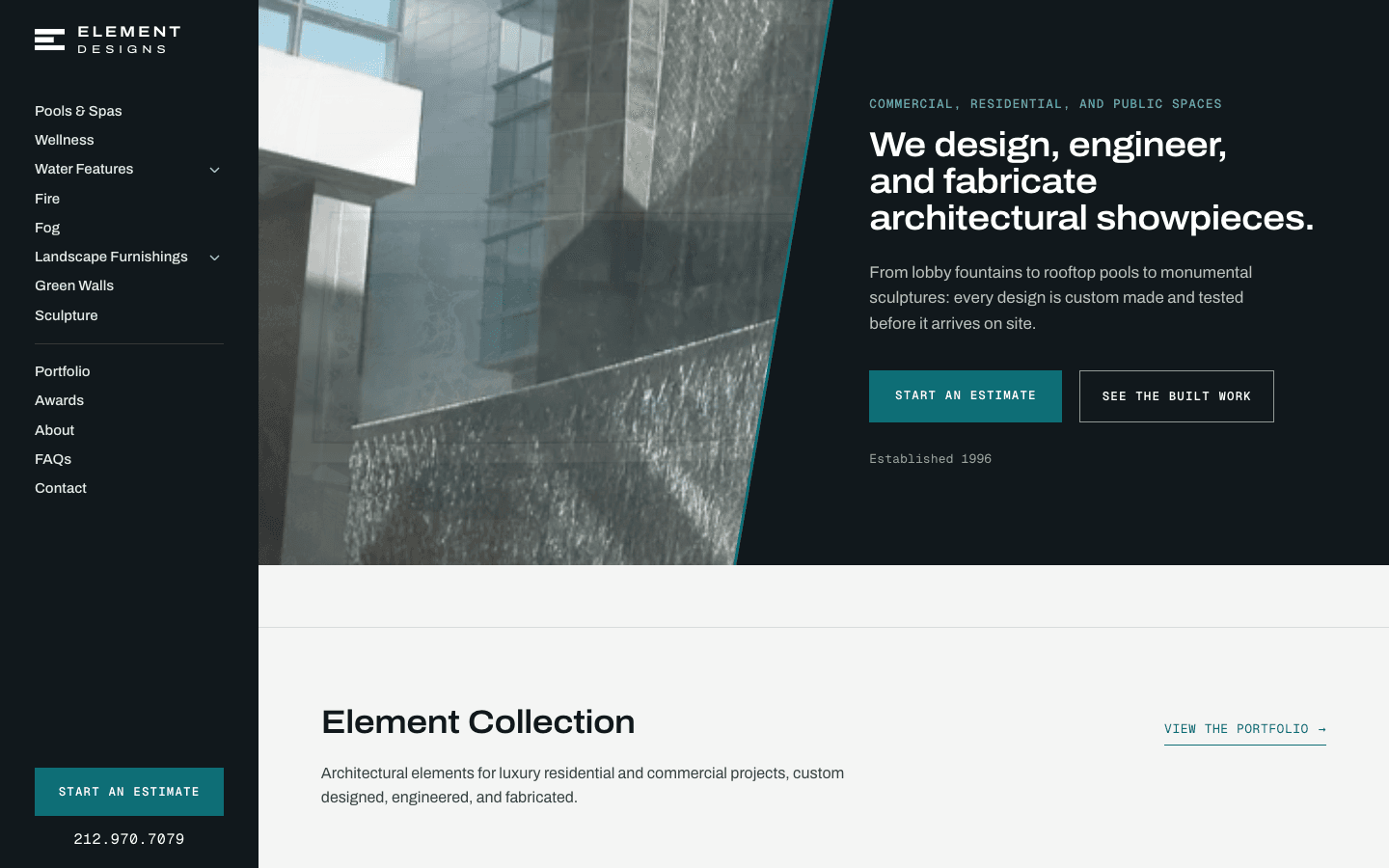
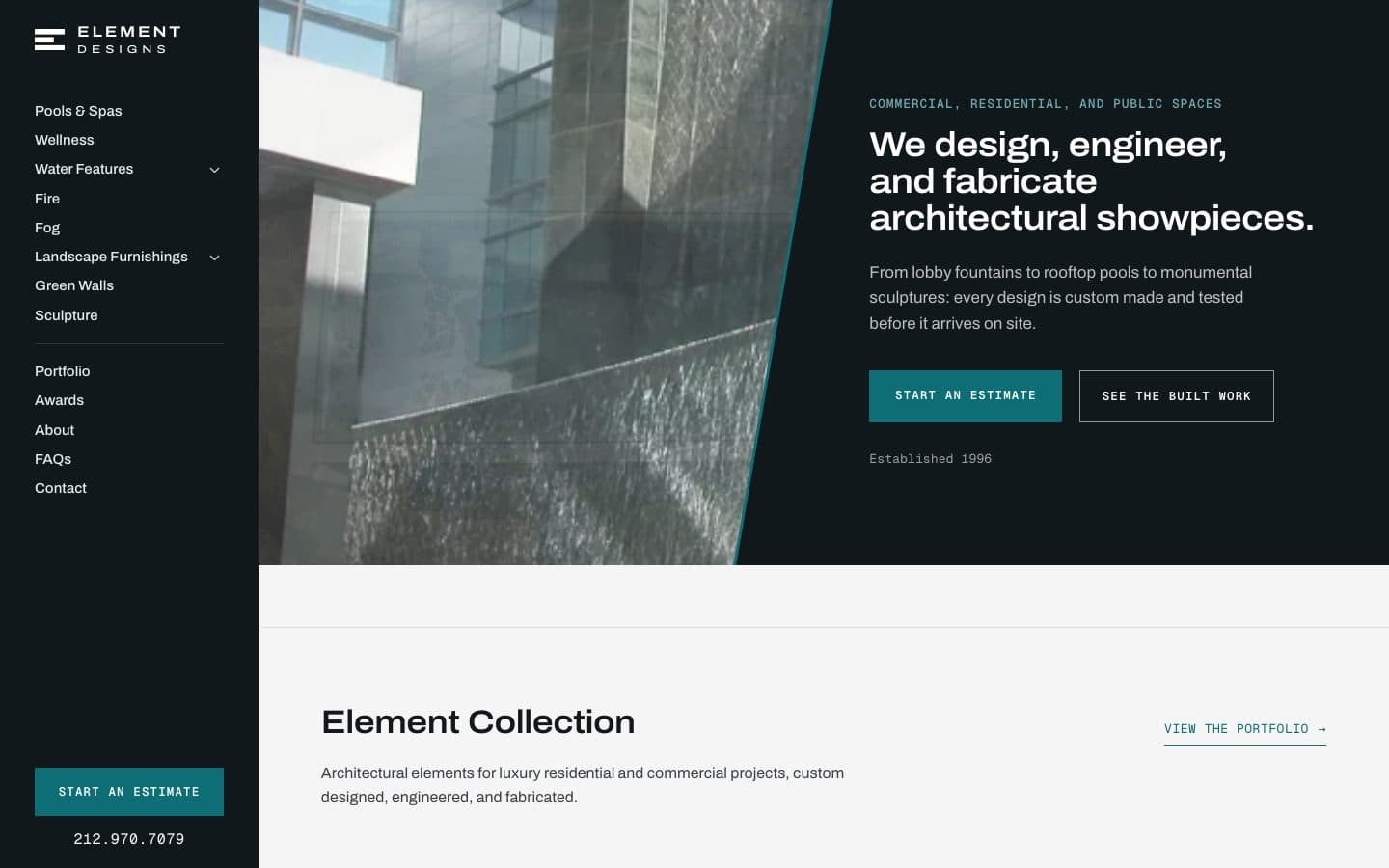
We redesigned the website for Element Designs, a studio that has designed, engineered and fabricated custom water features, fire and fog features and sculpture since 1996. The new 33-page site went live on September 22, 2026. Here's what changed in its first six days.
+28%
better average Google position
18.6→13.4
+133%
more appearances in Google's AI search
1.0→2.3 a day
+460%
more clicks from Google search
0.24→1.33 a day
Measured in Google Search Console, comparing September 22 to 27 with the three weeks before launch. AI search appearances come from Google Search Console's generative AI features report. The home page now averages position 6, and it ranks third for "custom water features in new york". Six days is a small sample, so we read these as early signals.
At a glance
| Client | Element Designs |
| Industry | Architectural design, engineering and fabrication |
| Locations | Florida, New York, California, Texas, Illinois and Canada |
| What we did | Website, content, SEO and AI search, estimate form linked to their CRM |
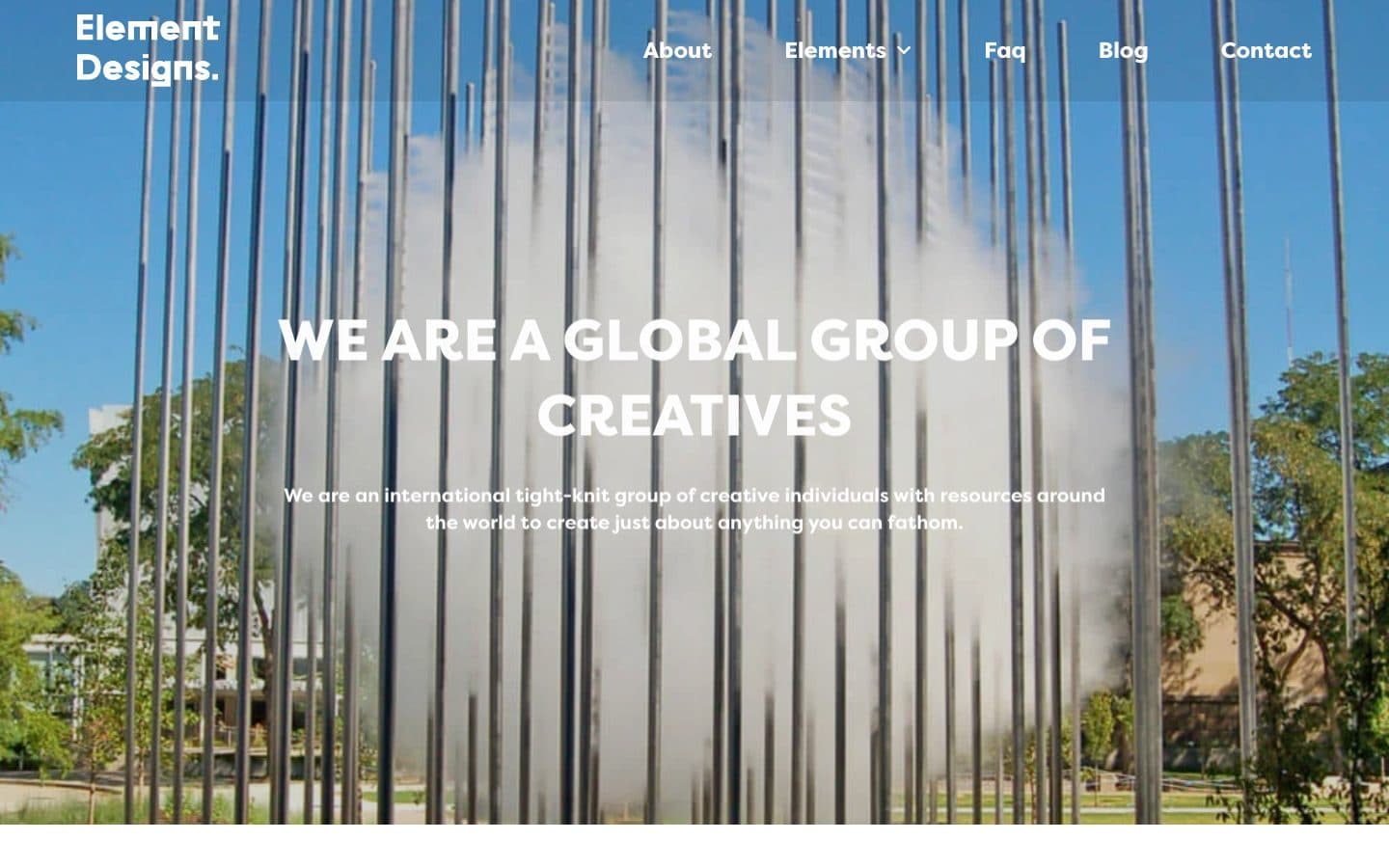
Thirty years of work that wasn't coming up in search
Element builds waterwalls, rain curtains, bubble walls, fountains, fire and fog features, pools, green walls and sculpture for hotels, spas, office lobbies, public plazas and homes. Licensed partners handle installation under the studio's supervision.
In June we ran 16 searches Element's buyers actually type, like "indoor waterwall for hotel lobby" and "restaurant bubble wall". The old site didn't come up for any of them. We ran seven buyer questions too, like "who designs and builds custom waterwalls for hotel lobbies", and none of the results named Element. The site ranked for 27 keywords and sat at position 14 for its own name, which at least four other US companies share.
Ads filled the gap, but every ad click landed on the home page, whatever the person had searched for. Element wanted a site that finds the right buyers on its own and takes each one straight to the product they came for.
One page for every product
Each product got its own page on a shared showroom layout, so a hotel designer looking for a bubble wall lands on bubble walls.
- 19 product pages, each written in the words buyers use for that product
- 8 portfolio collections with 303 real project photos
- 52 answered FAQs, marked up so Google and AI tools can read them
- An estimate form that emails the studio, confirms with the visitor and creates a lead in Element's GoHighLevel CRM
The design went through 17 rounds of Element's feedback, and any product claim we couldn't confirm stayed off the site. At launch, Google PageSpeed Insights scored it 100 in all four categories on desktop. On mobile it scored 93 for performance and 100 for the rest.
It's the structure we recommend for manufacturers and fabricators: a page for each product, real project photos, and answers to the questions buyers ask before they call.
Keeping the old site's rankings through the migration
Google had spent years learning the old site's addresses. After launch, our SEO audit checked each of them against the new site and identified 64 old pages the new site wasn't serving. Those pages had earned more than half of the clicks outside the home page over the past year, and 10 of the site's 27 rankings pointed at them.
We redirected each one to its new address. The old /water page now goes to /water-features, and /architectural-fog goes to /fog. We tested 102 addresses, and every one works on the live site.
Element owns all of it
The code is in Element's GitHub, the site runs on Element's Vercel account and email goes through its Resend account. Every change arrives as a pull request that Element approves. Here's why owning your website matters.
Planning a website redesign?
Our website redesign services follow the same process for every site: pages built around what buyers search for, AI search optimization from the start, and every old address mapped to its new page. You own all of it at the end. We're based in Toronto and build sites for clients across Canada and the US. More on how we approach web design in Toronto.
FAQs
What readers usually ask
How do you keep SEO when redesigning a website?
List every address on the old site with its search history before anything moves. Give each one a new page or a redirect to the closest match, then check the list against the live site after launch. For Element, that check found 64 old pages to redirect, and its average Google position improved by 28% over the first six days after launch, a small sample.
Will a website redesign hurt my SEO?
It can, if old pages move to new addresses without redirects, because the rankings tied to them fade. Done carefully, a redesign can lift rankings instead, since the new pages match what buyers actually search for.
How many redirects does a redesign need?
One for every old address that has earned clicks, rankings or links. Element needed 66 redirect rules to cover 64 old addresses. Start with a full list of the old site's addresses and their search history.
How long does a website redesign take?
Element's took just under four months, from June 1 to September 22, 2026, with 17 design rounds and 33 pages. A smaller site can move faster.
When will I know if a redesign worked?
Indexing and position changes show up within days. Clicks and inquiries usually take a few months to build.
By SimpleVision, a Toronto practice built on 10+ years of product marketing and strategy for brands like Google, Apple, and Walmart. About the practice → We write with AI and check every figure against its source. How we write →
Where this leads
Get more customers.
A new website, or a rebuild of yours, with SEO and AI search built in, so customers find you and get in touch. Yours to keep.